

Varenna has introduced new regulations to manage large tourist groups, reduce noise and encourage more respectful behaviour in one of the most visited villages on Lake Como.
Table of Contents
New Tourism Regulations in Varenna
Varenna, Italy, is a picturesque village nestled on the eastern shore of Lake Como, renowned for its charming streets, vibrant flowers, and stunning views of the surrounding mountains. As you stroll through its narrow alleys, you’ll be captivated by the colorful houses that line the waterfront, each showcasing a unique blend of Italian architecture and local artistry. This quaint town is a gateway to the rich history and culture of the region, with landmarks such as the historic Villa Monastero and the enchanting Castello di Vezio standing testament to its storied past. Visitors can immerse themselves in the local culinary delights, exploring traditional Italian cuisine at family-run trattorias that offer fresh, locally sourced ingredients and delectable dishes.
Varenna is a beautiful town. However, it is no longer the hidden-gem it once was and is often overcrowded and becoming uncomfortable for residents. In 1991, the national census registered 823 residents in Varenna. Today there are 650. Trains are often overbooked, tour groups block the passageways and for many, trying to complete daily errands is outright impossible at certain times of the day.
Several news outlets such as LeccoToday, report on how the measures address the increasing pressure that mass tourism places on the narrow streets, public spaces and everyday life of the small lakeside community.
The Varenna Municipal Council approved two amendments to the local urban police regulations on June 26, 2026. The new rules came into force on June 27 and apply to organised tour groups, guides and visitors throughout the municipality.
Organised Groups Limited to 25 People
Under the new regulations, organised tourist groups visiting Varenna may include no more than 25 people.
School groups visiting for educational purposes and parish youth groups are exempt from the limit. However, all organised groups are expected to move through the village without blocking pedestrian routes or preventing other people from using public spaces.
Groups may not stop for explanations in several of the most congested areas of Varenna, including Piazza San Giovanni, Piazzetta Brenta, Via IV Novembre, Via Corrado Venini, Via Enrico Fermi, Piazza Martiri della Libertà, the Giorgio Monico walkway, Riva Grande, Riva dei Marmisti, Via XX Settembre and the narrow contrade of the historic centre.
The municipal government may also establish designated itineraries that organised groups will be required to follow.
Guides who disregard the regulations may receive fines ranging from €100 to €400. Repeated violations can result in a temporary ban on conducting professional tours within the municipality for a period of between three and 12 months.
No Loudspeakers or Amplified Commentary
Tour guides and group leaders are no longer permitted to use megaphones, loudspeakers or other devices that amplify their voices.
The rule is intended to reduce excessive noise in the village and protect residents, businesses and other visitors from the disruption caused by amplified tour commentary.
Varenna is exceptionally compact. Its restaurants, private homes, shops, churches and visitor attractions often share the same small streets and squares. The voice of one guide addressing a large group can therefore dominate an entire public space.
Swimwear Must Remain Near the Water
The second amendment concerns clothing and public decorum.
Visitors may no longer walk through Varenna bare-chested or dressed in swimwear. The restriction applies throughout the municipal territory, with exceptions for beaches, piers and boat docks, where beach clothing remains appropriate.
Those who disregard the rule may receive a fine of between €50 and €200.
The measure does not prevent visitors from enjoying the lake or Varenna’s waterfront areas. Instead, it distinguishes between spaces intended for swimming and boating and the residential streets, restaurants, churches and public squares of the town.
Balancing Tourism and Local Life
Varenna has a permanent population of approximately 650 residents but welcomes hundreds of thousands of visitors each year. Its popularity, supported by frequent train and ferry connections, has made it one of the most accessible destinations on Lake Como, while also placing considerable pressure on its infrastructure and public spaces.
Its direct railway connection with Milan and its position on the central Lake Como ferry network have made the village one of the most accessible and photographed destinations on the lake.
Mayor Mauro Manzoni said that Varenna is proud to welcome visitors from around the world, but that the quality of life of residents cannot be sacrificed to mass tourism. The municipality has presented the new rules not as an attempt to discourage tourism, but as a way to manage it more intelligently and respectfully. (Il Giorno)
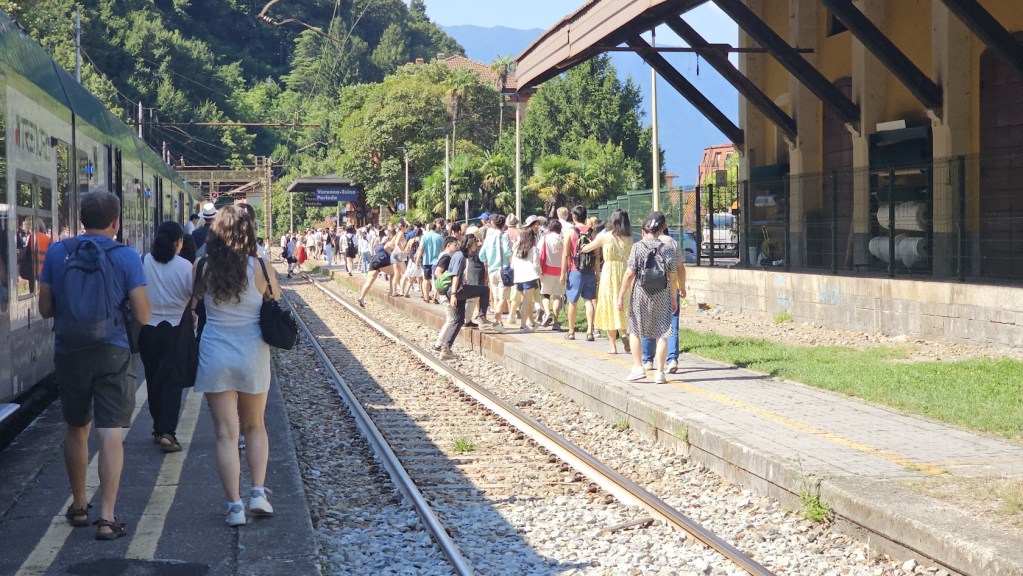
Our Take: Varenna Needs Smaller Groups
At LakeComoStyle.com, we are strongly in favour of tourism on Lake Como. We encourage people to visit, explore and appreciate the lake, but tourism must be responsible and respectful of the communities that make these places worth visiting.
Although limiting organised groups to 25 people is a step in the right direction, we believe that 25 is still too many for Varenna.
The streets, lanes and lakeside paths are far too narrow to accommodate groups of that size comfortably. A more appropriate maximum would be 15 people, or fewer in the busiest parts of the historic centre.
The exemption for school and parish groups is also questionable. A group does not take up less space simply because its members are students or belong to a church organisation.
When a school or organised association has more participants, the solution is straightforward: divide the visitors into smaller groups and employ additional guides. This would reduce congestion, provide more work for local professionals and offer travellers a more engaging and personal experience.
Smaller groups can hear their guide without shouting, move through the streets more easily and spend time in local businesses without overwhelming them.
The Ban on Loudspeakers Is Long Overdue
We completely agree with the prohibition on megaphones and amplified commentary.
Few things are more disruptive than sitting outside a favourite café and hearing someone loudly explain the history of the medieval tower directly in front of you.
Part of the reason for choosing that café is to enjoy the view of the tower, the village and the atmosphere—not to look at the backs of a large group of tourists while a guide’s voice dominates the square.
Guides have alternatives. Smaller groups can listen without amplification, while discreet audio headset systems allow visitors to hear the commentary without imposing it on everyone nearby.
Public spaces belong to residents, workers and independent travellers as well as organised tours.
Visitors Should Dress for a Town, Not a Beach Resort
We also agree that a basic standard of decorum should be respected.
Varenna is beside the water, but it is not simply a beach resort. People live, work, shop, attend church and raise families here.
Swimwear is entirely appropriate on the beach, at a lakeside swimming area or while boarding a boat. It is not appropriate when walking through the historic centre, entering shops or sitting in restaurants.
Visitors do not need to dress formally. They simply need to recognise that they are entering a living community rather than moving through a holiday attraction created solely for tourists.
Residents Must Not Be Pushed Aside
Respectful tourism must also include practical consideration for local residents.
People holding resident travel cards should be able to board ferries and use essential public transport without being displaced by visitor crowds. Ferries are part of everyday life on Lake Como, not merely sightseeing boats.
Residents use them to travel to work, attend appointments, go to school and reach neighbouring towns. Tourism should not make those ordinary journeys unmanageable.
As travellers, we should not disrupt the lives of the people who live here. After all, it is the residents, local families and business owners who have preserved the character of Varenna and helped make it such a desirable place to visit.
The new regulations are an important acknowledgement that welcoming tourism does not mean surrendering a town entirely to it. Varenna should remain open, hospitable and accessible—but it must remain liveable too.
You can also Follow us on Substack
Discover more from LakeComoStyle.com
Subscribe to get the latest posts sent to your email.